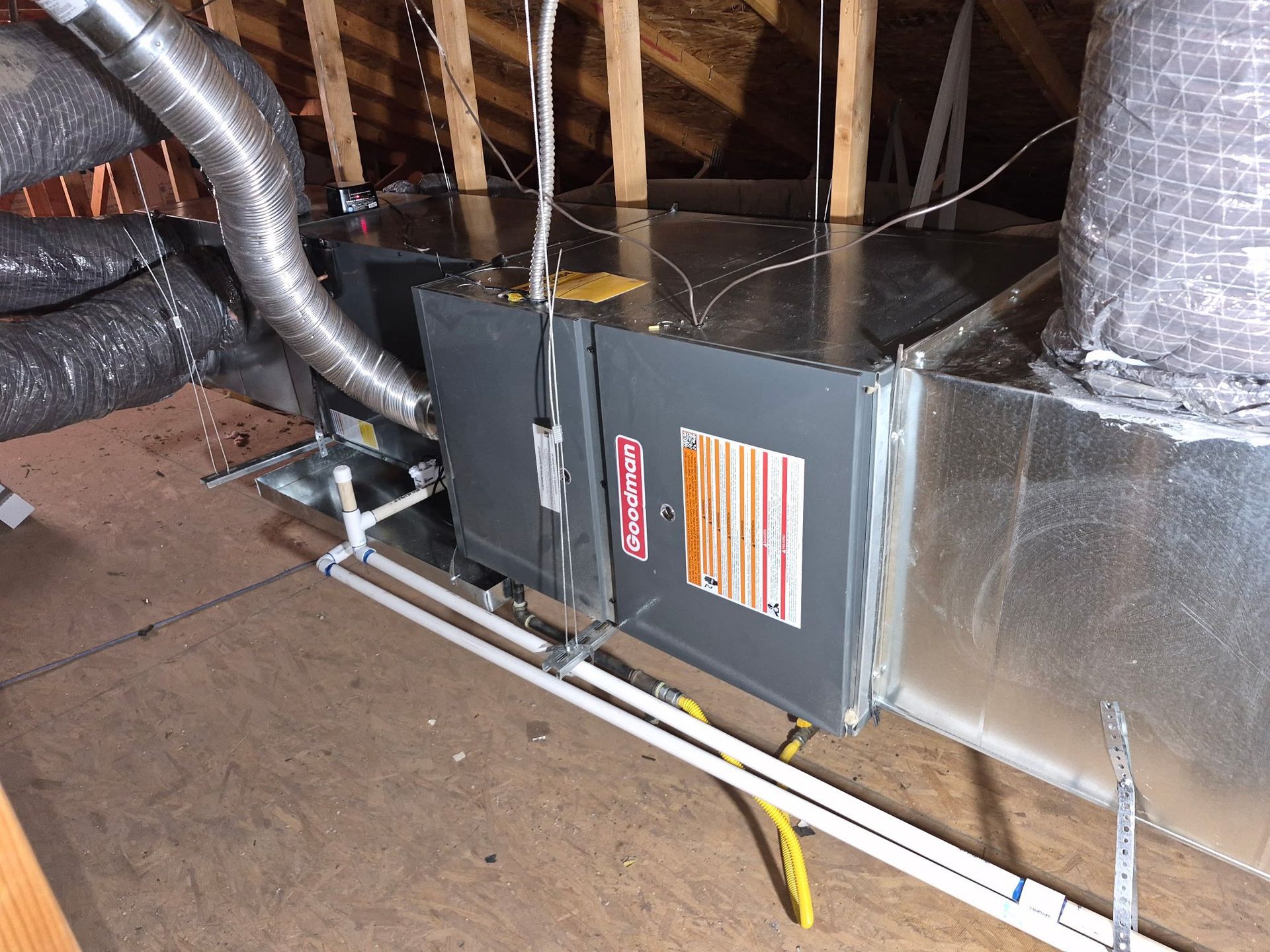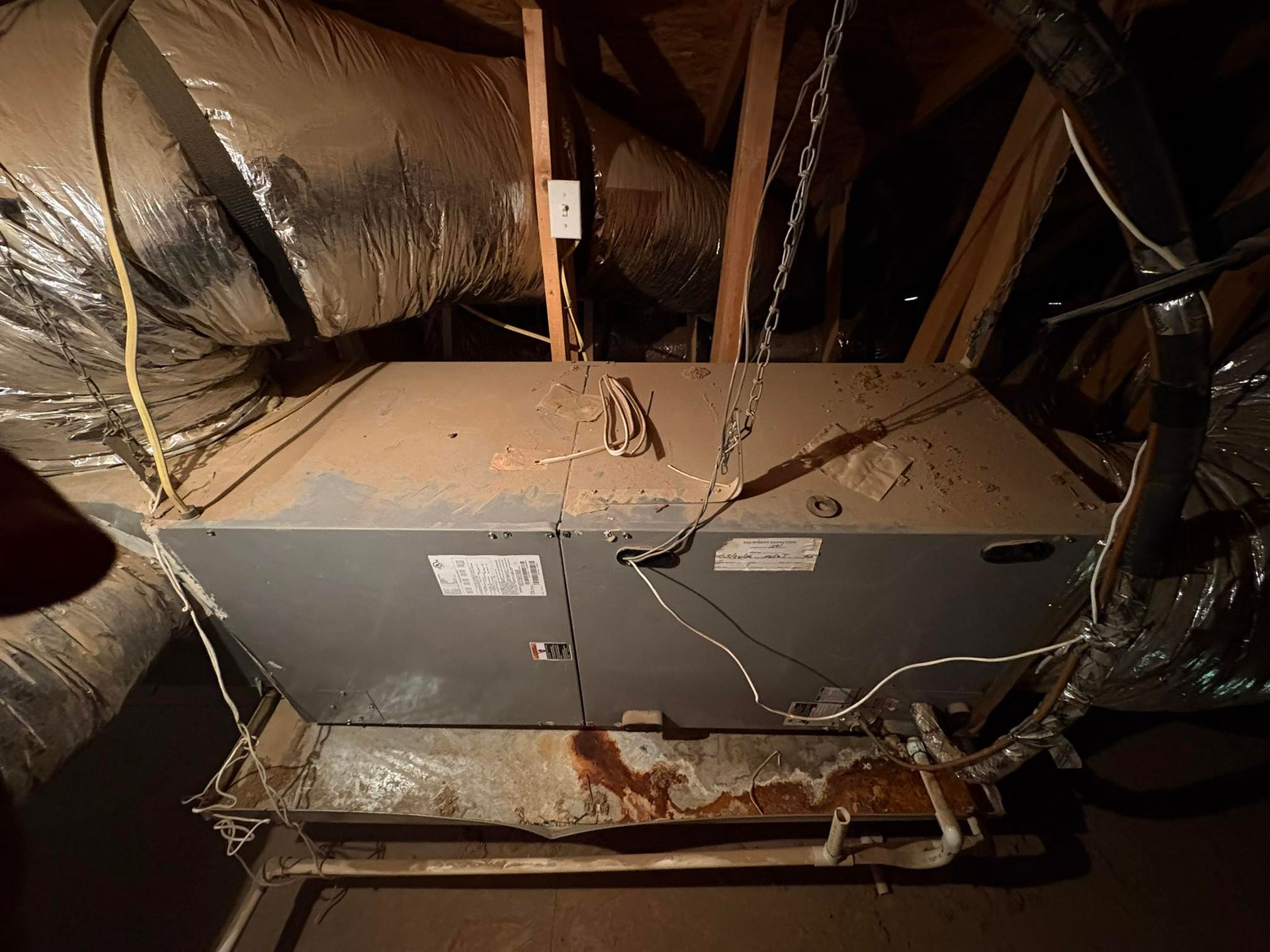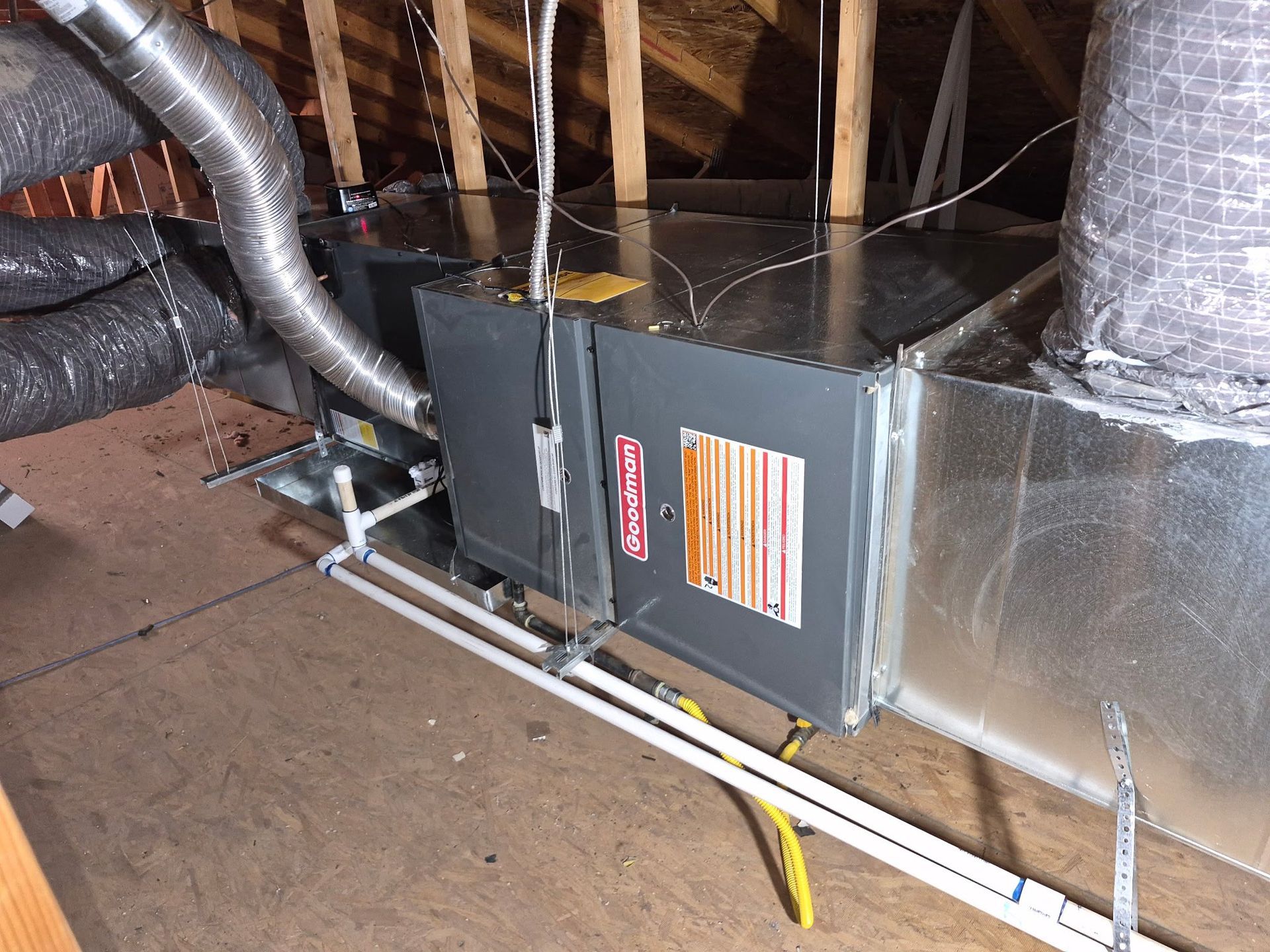
Why Is My AC Freezing Up in Arizona?
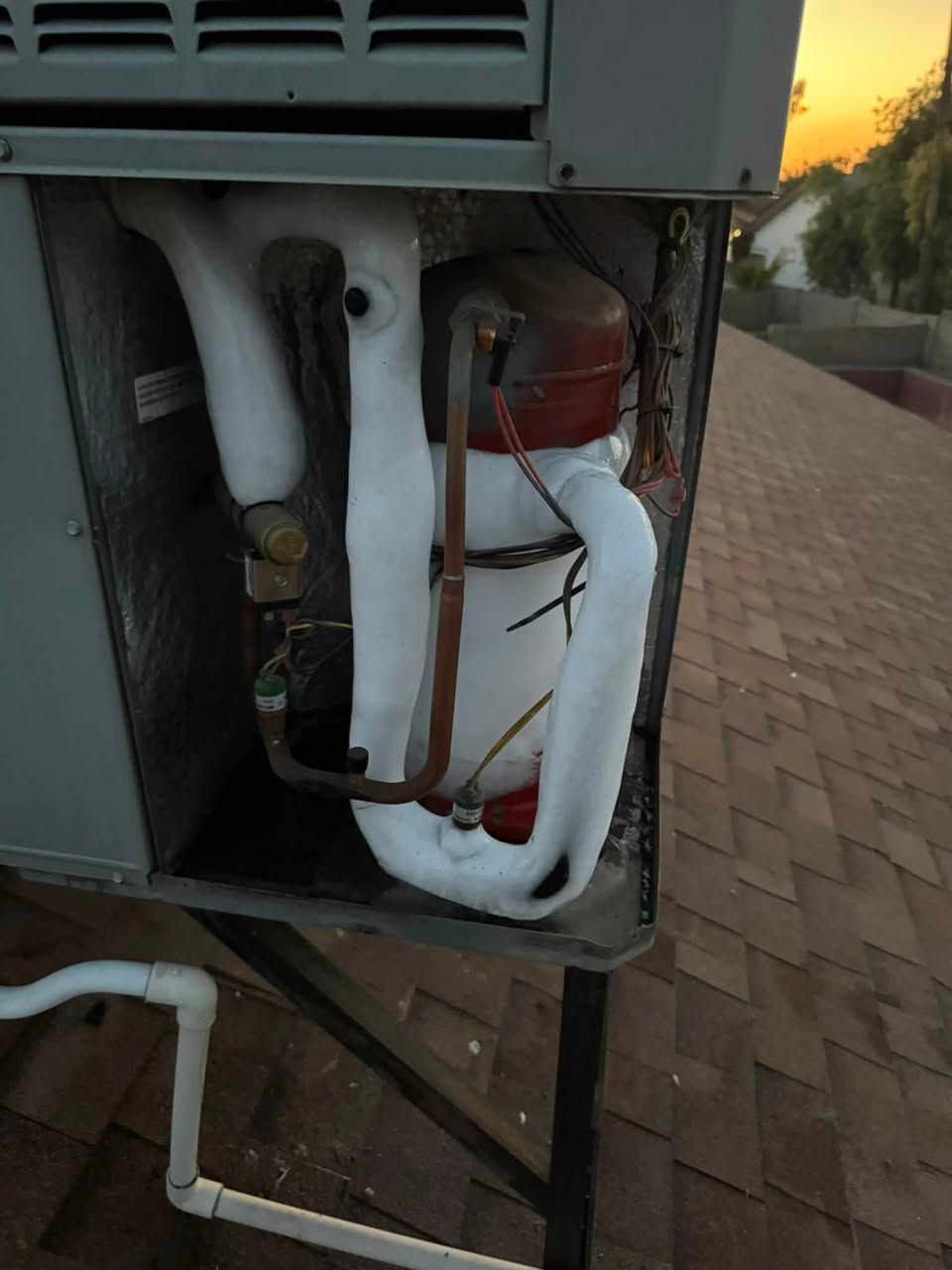
If your AC is freezing up in Arizona, it is almost always one of two things: your system is not getting enough air across the indoor coil, or it is low on refrigerant. Both cause the coil to drop below freezing, and the moisture in your air turns to ice on the copper. Turn the cooling off, leave the fan running to melt the ice, and call an HVAC company before you run it again.
It feels backwards — 112 degrees outside and a block of ice inside your air handler — but that is exactly how it works, and it is one of the most common calls we take at Western Sky Mechanical in July and August.
What is actually happening when an AC freezes up
Your indoor coil gets cold on purpose, and the air moving across it is what keeps it from getting too cold. Take that airflow away, or take away some of the refrigerant that is supposed to be absorbing heat, and the coil temperature keeps dropping. Once it goes below 32 degrees, the humidity in your air freezes onto it. Now you have ice, which blocks even more air, which makes more ice. It snowballs fast, and by the time most folks notice, the whole coil is white.
The four things that cause an AC to freeze up in Arizona
After forty-plus years in Phoenix homes, the causes come down to a short list:
• A dirty filter. This is number one by a mile. A filter packed with dust chokes the airflow the same way a pillow over your face would.
• Blocked or closed vents. Homeowners close off registers in guest rooms to save energy, and the system loses the return air it needs.
• Low refrigerant from a leak. Less refrigerant means lower pressure in the coil, and lower pressure means a colder coil.
• A weak or dirty blower wheel. If the blower is caked with dust or the motor is worn out, it moves a fraction of the air it should.
Duct problems belong on that list too. A crushed flex duct in a 140-degree attic, or a return duct that has come loose, will starve the coil just as fast as a dirty filter. That is a big reason we look at duct repair whenever a system freezes more than once.
What to do right now if your coil is iced over
Do not chip the ice off, and do not point a space heater at it. If the vents were blowing weak or warm air before this started, why is my AC blowing warm air in Arizona covers the other causes worth ruling out. Otherwise, here is the order we give people over the phone:
• Switch the thermostat from COOL to OFF, and set the fan to ON.
• Let it run that way for two to four hours. The room-temperature air moving over the coil melts the ice safely.
• Put in a fresh filter while you wait, and open every supply register in the house.
• Check for water around the air handler and put towels down. A big melt can overflow the drain pan.
• Once the ice is gone, try cooling again. If it freezes a second time, stop running it and call for AC repair.
That last step matters. Running a frozen system is how a bad afternoon turns into a compressor replacement — liquid refrigerant that should have boiled off in the coil comes back and washes the oil out of the compressor.
A real example from a Peoria house last August
A homeowner called on a Saturday afternoon in August, second summer in the house, saying the AC ran all day and the house never got below 84. She had already replaced the thermostat, thinking that was it.
When our tech pulled the door on the air handler, the coil was one solid block of ice. The filter had not been changed since she moved in, and she had shut the registers in two spare bedrooms because nobody used them. Two problems stacking on each other. We thawed it, put in a clean filter, opened the registers, and checked the refrigerant charge — which was fine. No leak. She was bracing for a new system and it was a filter and a couple of open vents. That is the kind of call that never comes back if somebody is doing an AC tune-up every spring.
The honest counterpoint: sometimes it is not a simple fix
We would love to tell you every frozen coil is a filter. It is not. If your system is low on refrigerant, that refrigerant went somewhere, and adding more without finding the leak is throwing good money after bad. A leak search takes time, and on an older system the leak is sometimes in a spot that cannot be repaired without replacing the coil.
And if your unit uses R-22 and it is pushing twenty years old, refrigerant for it is getting hard to find, and that is usually where we sit down and have the honest repair-versus-replace conversation instead of chasing leaks year after year. Plenty of times we look at a fifteen-year-old unit that has been maintained and say: fix it, it has life left. Both answers are real answers.
Call Western Sky Mechanical if your AC keeps freezing up
An AC freezing up in Arizona is your system telling you something is wrong upstream of the coil. Ignore it and you risk the compressor. Catch it early and it is often a small repair.
Western Sky Mechanical is family-owned with more than 40 years in the Phoenix metro, licensed under ROC #366148. You get a flat quote before we start work, a 1-year parts warranty, and a 2-year workmanship guarantee. We answer 24/7 for emergencies and we do not charge an after-hours markup, so a coil that freezes at 9pm on a Friday is not a reason to wait until Monday. Call us at 602-767-5341 and we will get someone out.
FAQ
How long does it take an AC to thaw out?
With the fan running and the cooling off, most coils thaw in two to four hours. A badly iced system can take closer to eight. Turning the cooling back on early just refreezes it, so give it the full time.
Can a dirty filter really freeze a whole air conditioner?
Yes, and it is the most common cause we see. In Phoenix, with dust and the amount of hours these systems run, we tell customers to check the filter monthly from May through September and change it whenever it looks gray.
Is it safe to run my AC after it thaws?
For one test cycle, yes. If it cools normally and stays that way, the airflow was the problem. If it ices up again within a day, shut it off and have it looked at, because at that point you are likely low on refrigerant and running it can damage the compressor.
You might also like